A great reading year 

I will probably not reach my goal of reading 50 books this year. 

Right now I’m at 43  with 3 books to finish. 

But I’m proud of my reading list. The range of topics and the mix of fiction and nonfiction was perfect!

Plus, I had a LOT of fun. 

The books that I chose were interesting and educational, inspirational and challenging. 

Also, I’ve recommended more books this year than ever before. 

Getting to know my friends and their reading habits was quite an experience. 

It taught me that paying attention in conversation is the best way to know what someone will read and enjoy. 

Overall, 2015 has been a great reading year. 

Going back to school will definitely change my 2016 reading list…

I’m hoping to squeeze in some personal selections (aka non-school related). 

Who knows if that will happen until the summer, but I’m not complaining. 

What are some books you’ve enjoyed reading this year?
Did you reach your reading goal?
Book talk is the best

IMG_1632I love book people.

My waitress at lunch today was a book person. She came into work with a book in her hand. She saw me reading after I ordered and struck up a conversation.

What are you reading?

What’s the book about?

What’s your favorite genre?

Talk about a great time of discussion. My book obsession is not shared by many! Statistics say that the number of readers is shrinking with each generation.

Literacy is such a precious gift. Ray Bradbury, author of Fahrenheit 451, once said:

You don’t have to burn books to destroy a culture. Just get people to stop reading them.

Our society puts a lot of emphasis on education, yet it does not stress the importance of reading enough. I can’t count the number of articles I’ve read in the past couple of years dealing with “screen time” and “how technology is reshaping education.”

Technology is wonderful. Making education fun is fine. What’s not fine is that the majority of children I meet hate reading.

The notion that blogs and magazines, tutorials and games can replace the knowledge found in a book baffles me.

I’m not going to debate the virtues of e-readers vs. paper books in this post either.

Let me just go ahead and define what I consider “reading”:

  • Printed books
  • E-books
  • Audio books

I value all the forms of reading available to us today. This debate of what does and does not constitute reading is silly in light of the bigger problem at hand.

I don’t care about your preferred method of reading. I’m just happy you are reading at all! This is no time for us to start hating on methods.

So, don’t be afraid to interrupt my reading at a restaurant. After I dance a jig, I will happily discuss books with you.

Building Windmills

Choices, choices

Choices, choices

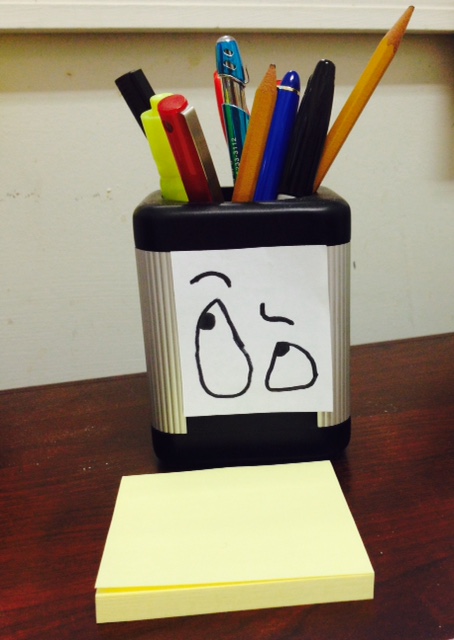
Today I needed pens for my office and I had 518 options.

Not everyone has these kind of options.

In The Boy Who Harnessed the Wind, William Kamkwamba built a windmill using parts from a junkyard. He did it without modern tools too. 

There were no trips to Lowe’s or Home Depot to agonize over 50 brands of hammers.

And William still managed to bring electricity to Malawi.

A whole country found hope because one boy got busy.

What could be accomplished if we stopped complaining about not having the right tools? The right education? The right job?

You can own 518 different pens and never write that book. A garage full of tools and never rebuild that classic car. harnessing wind

Are too many options crippling us as a people?

My circumstances will never be perfect enough to do ___________.

Yours won’t either.

As a kid, I rarely had a complete set of toys.

I collected toys from yard sales and thrift shops. I made my toys houses out of cardboard boxes.

Countless hours were spent weaving stories in my own little world.

What I had was enough. My imagination had no limits.

And then adulthood crashed my party.

“You’re an adult now. Play time’s over.” is something I’ve heard a lot since graduating college.

But I don’t want to spend half my life hating my life.

I’m willing to pay the price for doing things differently. It’s better, to me, than waking up one day and realizing I’ve been asleep for 50 years.

Which brings me back to having enough….

Here’s my favorite definition of contentment:

Contentment is knowing that I already have everything I need to be happy.

What I have–right now–is enough.

There’s nothing I can’t accomplish if I already have what I need.

It’s time for you and I to build some windmills.

Labor Day Learning

Happy Labor Day!

I hope you ate some tasty food. 

We had barbecue (my personal favorite) and sang America, the Beautiful. 

Did you know that Labor Day’s been around since the 1800s? 

The holiday was and is about celebrating all the laborers who work hard, building and maintaining America’s varying infrastructures. 


This is the closest I’ve ever come to being a lumberjack. Happy Labor Day!

 From homes and offices to highways and bridges–and everything in between–America would look a lot different without the hard work of tradesmen. 

I encourage you to read up on the history of Labor Day. Google that junk, as my friend Bethany would say. 

Yes, there is more to the holiday than simply enjoying a long weekend and eating barbecue (though I want to know when National Barbecue Day rolls around). 

Put down your fork for 5 minutes and learn something. 

History is all around us. It’s not confined to a dusty textbook. And it can only be ignored for so long. 

I don’t want to be a mindless zombie when it comes to holidays. 

I want to take the time to celebrate each one by honoring its unique history. 

Remembering a great teacher

One of my former English professors passed away. He was battling multiple myeloma (cancer of the blood plasma).

Dr. Chris Hokanson was a great man and a wonderful teacher.

At first he intimidated me because of his credentials:

B.A., Stanford University
M.Ed., Harvard; M.A.
Ph.D. Indiana University

My first thought was, “I’m going to fail a few classes this semester.”

I quickly discovered, though, that Dr. H wasn’t an academic elitist, ever boasting about his superior education.

He was a quiet, yet confident man who wanted all of his students to reach their full potential.

ChrisHokansonDuring class discussions, Dr. H made an effort to point out your good thoughts and comments. Sometimes he’d even say, “That would make a great topic for your paper!”

(Any time a professor says an idea is a good paper topic, you’d be foolish not to take the suggestion and run.)

Even when I turned in a horrible draft–probably written at 2 AM–for review, he never complained. Sure, he’d joke about the noticeably poor quality of my work, but he always ended by saying that it was well on it’s way to being a great paper.

Dr. H took an interest in his students’ lives beyond the classroom doors.

When my dad came to visit me at Judson (our first meeting), I was late turning in a paper–really, really late. Dr. H asked me how everything was going and offered me an extension.

I deserved an automatic “C” yet I was granted an extension…

Many Judson girls have similar stories. Whether it was a family crisis, sickness, or just general slacking, Dr. H was gracious. He always gave students the benefit of the doubt.

Judson College will not be the same without Dr. Hokanson. He will be greatly missed by faculty, staff, and students alike.

I lost my ruler, so I can’t measure my IQ

Today I discovered an organization called Mensa.

Their only requirement?

Your IQ has to be in the top 2% of the general population.

And you can’t even lie about it because they want certified test results.

Here are the purposes of Mensa (taken from their website):

Mensa has three stated purposes: to identify and foster human intelligence for the benefit of humanity, to encourage research in the nature, characteristics and uses of intelligence, and to promote stimulating intellectual and social opportunities for its members.

I find the whole concept amusing.

A whole organization where high IQ is the standard…..

Can you really measure intelligence with a test?

How is that even possible?

Some of the smartest people I know have never graduated high school.

Some of the dumbest people I know have three to five titles behind their name.

Intelligence is too complex of a subject to be measured by only a test.

What about wisdom and character and common sense? Shouldn’t that be part of the intelligence equation?

It’s my dream to sit in a room full of all kinds of people–high IQ or not–and brainstorm how to make a difference in this world.

And put each person’s special gifts and talents in our toolbox to do it.

How cool would that be?

Please hear me out: I’m not bashing anyone or any organization. Don’t leave here thinking that I’m a bitter cynic.

I just don’t see how only gathering with your own kind is ever a good idea. You’re missing out on a lot of  great adventures and life lessons that way.

On a completely silly note, if a group of Christians formed a similar group, I hope they would call it “Amensa.” A girl can dream, right?

Expect more

I had a band director in high school who struck fear into the hearts of students. Everyone loved her—she deeply cared about us all—but mediocrity was not acceptable. Many times I came home thoroughly chastised for not knowing my part.

The cool thing is that our band always made it to the state competition and always placed at the top of our class. I whined a good bit because she was “so mean,” but now it’s clear that my teacher taught her students the importance of discipline.

Today discipline is a dirty word.

Teachers can’t expect their students to do excellent work. Parents can’t expect their children to do chores or even to behave. That’s too much pressure. Their poor little psyches can’t handle it!

I’m not bashing children—I love children!—but undisciplined, lazy children turn into undisciplined, lazy adults. I feel bad for the children who grow up with no expectations. Life is not going to be kind to them.

Furthermore, it saddens me a bit that no one expects young adults to act as such. I am twenty-two years old. If I start acting infantile, please don’t label me as another hopeless cause from the upcoming generation!

Challenge my behavior. Expect more.

Isn’t that what we all need? To be challenged? For the bar to be raised a little bit higher?  I think a change would sweep across this nation if the older generations would expect something more than immaturity from the younger generations.

Discipline and responsibility—any good character trait really—is not obtained at the grocery store.They are learned behaviors. Who’s supposed to teach us?  

Don’t throw the younger generations under the bus. Help us to become strong, mature adults who make a difference in this world.

After all, we are the future. 

When the Chalk Dust Settles…

I am not a big fan of standardized tests.

Trying to measure intelligence using torture devices such as Scantrons and stuffy, windowless rooms is downright mean. Plus, people go into testing all stressed out because of high expectations. At least, that’s how I felt before every standardized test from elementary school through college. My stress level was through the roof!

It seemed as if the fate of my life rested on if I knew the circumference of a circle or the antonym of ambivalent or the number of protons in Californium.

Please do not take me as an opponent of education or as a slacker who has a vendetta against the education system. I am being a bit hyperbolic in order to prove a point about measuring success. I can remember time after time of cramming before tests and realizing a few weeks later that I did not remember anything. Though it’s quite shameful to admit now, at the time it didn’t matter whether I actually knew the material, only that I could regurgitate the correct answers.

Is it possible that by focusing on test results the quality of education is eroding?  

Some argue that if students were truly passionate, they would want to learn. Others say that teachers are burned out, so they do not make the subject matter fun. The political nuts scream out against corrupt politicians who are stealing money and robbing our children of a proper education. All of these answers have elements of truth, but I do not think that any one issue can be held solely responsible for the problem.

When the chalk dust settles, the real problem is plain: Both adults and children desire the riches of success and the expertise of professionals without putting in the work needed to achieve either.

By teaching children to expect something for nothing, I’m afraid that future generations, beginning with mine, are doomed to fail.